
There is this persistent belief that your relationship(s) needs to be perfect. No one should ever make any mistakes, lest you might hurt the other person or the relationship itself. When in doubt, keep it kind and gentle and do not rock the boat, especially if you are a woman.
Reality is a bit more complicated, especially once you start sharing space or responsibilities. Managing conflict is part of relationships. I would even argue it is one of the biggest growth opportunities, both for the individuals involved as well as for the relationship itself.
Breaking up vs shifting vs mending a relationship
Sometimes, relationship break. Sometimes they shift. And sometimes shifting is just a gentler word for breaking, with the result being the same. The people involved in the relationship do not want to continue in the situation. Traditionally, you’d be required to leave, to divorce, to move on to something else.
This is especially true if the reason for the break-up is dramatic: a fight, a sudden realization about priorities that can’t be aligned, the feeling of betrayal. Mending such a rift in an existing relationship is hard work, on all sides. It is often dismissed as too much trouble, or “it won’t ever be the same”.
Both statements are true.
Mending a broken relationship does take a lot of work. It requires patience, self-reflection, forgiveness, lots of communication, probably tears and a fair amount of exasperation.
The relationship won’t ever be the same. If you go through the trouble to mend the relationship, you end up with a different relationship. But different does not mean worse. It mostly means “unique and more resistant”.
It will never be the same. And that’s a good thing.
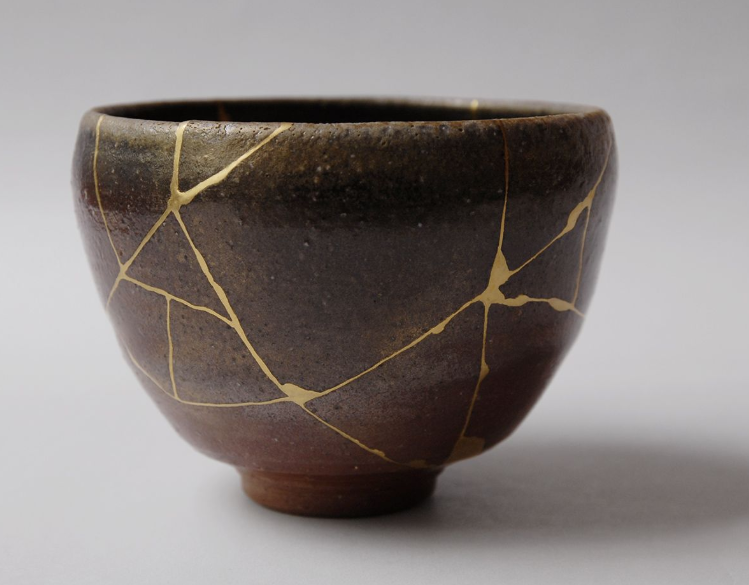
Reconstructing a broken relationship is comparable to the Japanese art of mending broken pottery with liquid gold (Kintsugi). This art form uses broken dishes and reassembles them in their original form, using gold as the glue. The pieces are seen as something unique, and the pattern is part of the history of the piece. It’s not so much about repairing, but about creating something new from the original that ceased to exist.
When a relationship experiences a radical change, that could end up in a break-up, something triggered that change. Usually, there’s a build-up and then one specific event triggers the crisis. If the two (or many) of you manage to use this crisis as the start of something new, something different, that is a good sign. It means that your new relationship is stronger, more self-aware, and more resilient than it used to be. And that is a good thing.
And maybe, just maybe, you manage to mitigate the next crisis before anything breaks completely. Both ourselves, and our relationships are work in progress after all.